HomeSafety Guidelines

Outdoor Safety

Outdoor Safety Guidelines – Summary

Staying safe outdoors begins with preparation, awareness, and good judgment. The following key areas help ensure a safe and enjoyable experience for all participants.


Weather Awareness

Always check the forecast before heading out and be prepared for changing conditions. Sudden shifts in temperature, wind, or precipitation can increase risk, especially in exposed or remote areas. Carry appropriate gear for rain, sun, or cold, and be ready to adjust plans if conditions deteriorate.


Wildlife Awareness

Understand the types of wildlife in the area and how to respond appropriately. Maintain a safe distance, avoid feeding animals, and store food securely. Make noise when appropriate to avoid surprising animals, and know basic safety practices for encounters (e.g., bears, cougars, snakes).


Fitness and Preparedness

Choose activities that match your fitness level and experience. Be honest about your abilities and pace yourself to avoid exhaustion or injury. Carry sufficient water, food, and essential supplies, and know basic first aid. Inform someone of your plans when venturing into less populated areas.


Appropriate Clothing and Gear

Dress in layers to regulate body temperature and wear suitable footwear for the terrain. Bring essentials such as navigation tools, sun protection, extra clothing, and emergency supplies. Proper gear significantly reduces risk and increases comfort.


Group Dynamics and Responsibility

Stay together as a group and maintain clear communication. Appoint a leader and a sweep (last person) to ensure no one is left behind. Respect varying abilities within the group and make decisions that prioritize safety over objectives. Encourage a supportive environment where members feel comfortable voicing concerns.


Overall Principle

Preparation, awareness, and teamwork are the foundation of outdoor safety. By planning ahead and looking out for one another, risks can be minimized and the experience enhanced for everyone.

General:

- Risk is inherent to any outdoor activity – understand these risks.
- Be prepared for all weather conditions and possible destination changes.
- Know and respect your limits and abilities.
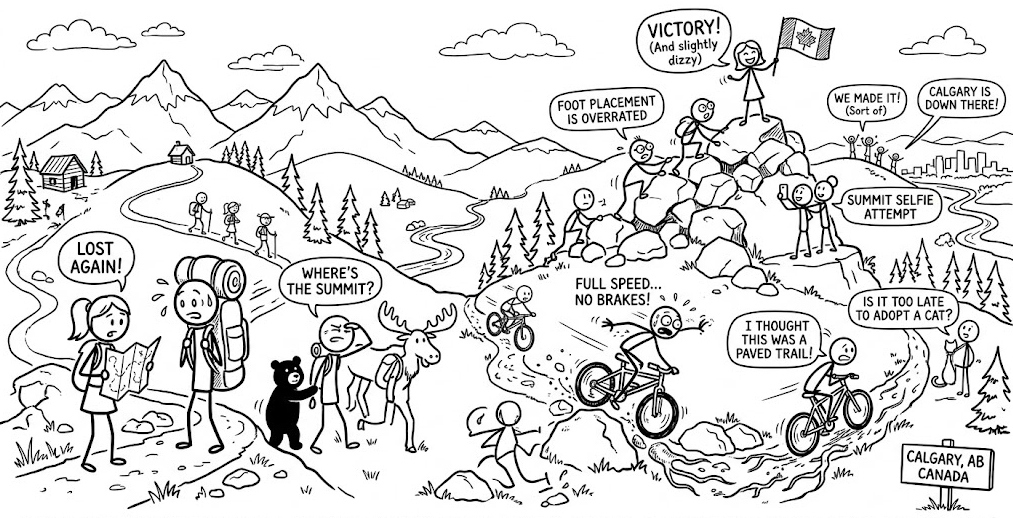
hikers bikers scramblers stick figures


Avalanche Awareness


During the winter months, many CORE members participate in snowshoeing and cross-country skiing activities. It is essential to remain vigilant about avalanche dangers, especially when venturing into the backcountry or travelling off-trail.

Training and Education

Several CORE volunteers have completed the Avalanche Awareness course offered by the Calgary Area Outdoor Council. These courses are available on an ongoing basis, ensuring members can continually improve their knowledge and preparedness.

Responsibilities for Event Coordinators and Participants

If you are coordinating or participating in a winter backcountry event, it is your responsibility to stay informed about avalanche hazards and current conditions. Awareness and preparation are key to ensuring the safety of everyone involved.

Resources for Avalanche Information

To support your planning and decision-making, several useful links are available on the CORE Resources page. In addition, the following two websites are highly recommended as reference points when organizing winter trips into the mountains:

CSAC Canada for Avalanche Conditions

NSIDC Avalanche Awareness Site (Educational)


Bear Safety 

When venturing into areas known to be bear country, your best approach for avoiding encounters with bears is to remain vigilant and proactive. Diggings, scat, visible tracks and overturned logs and rocks, are all early warning signs that bears are around. In most cases, bears will do their best to avoid people. Most encounters happen because bears are surprised by people, or they are defending their cubs or a kill.

The following list is based on the Wildsmart site which has additional information:

  • Always carrying bear spray and air horns.
  • Traveling in groups whenever possible.
  • Making lots of noise as appropriate, being situationally aware.
  • Leaving wildlife corridors to wildlife and recreate elsewhere.
  • Respecting all trail closures and warnings.
  • Walking your dog on a leash unless in a designated off-leash area.


Lightning: The following Environment Canada link provides good tips on lightning safety.


Fitness:

Be sure to stay fit to help avoid injuries when indulging in outdoor activities.